
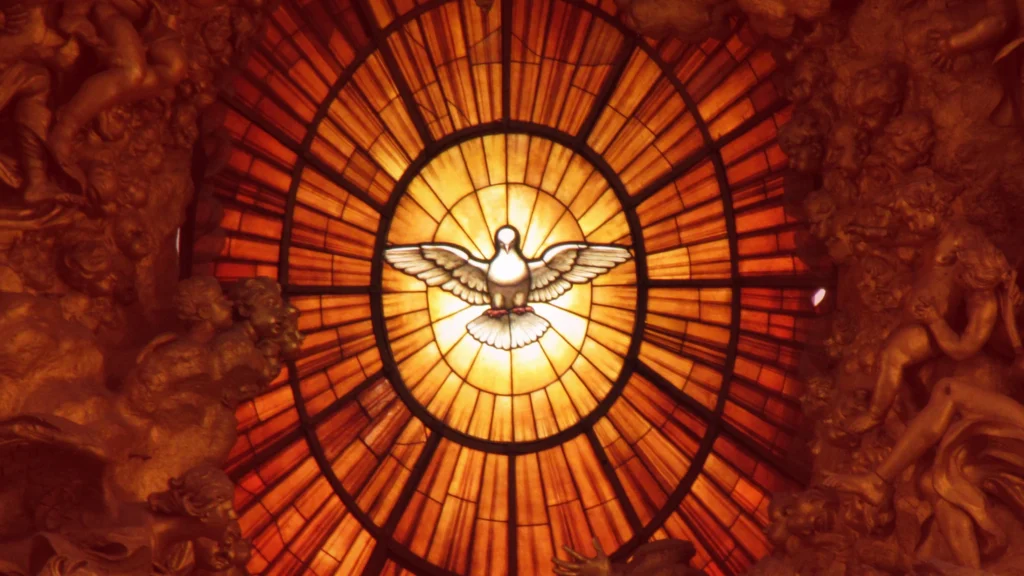
Pentecost and the Courage of Public Witness
Pentecost takes place 50 days after Easter and marks the birth of the Church. In the Book of Acts, Jesus’s followers were gathered in a house in Jerusalem when a rushing wind came down from heaven and tongues of fire rested upon each of them. Filled with the Holy Spirit, the disciples were empowered to speak in many languages and boldly proclaim the message of Jesus, the Good news! the disciples were before that moment: people hiding behind locked doors, paralyzed by fear. Pentecost is the story of how the Spirit moved them from that locked room into the streets.
What does Pentecost mean today for Palestinians and those in solidarity with us?
For over three years, we have witnessed the total desecration of human life. During this time, many Western church and institutions locked themselves behind closed doors, unwilling to speak truth to power. Some went further — blessing violence and complicity through a distorted theological lens. Yet alongside this silence and betrayal, Palestinians also witnessed fierce and creative solidarity. Prophetic voices within the church spoke out. Laypeople challenged their own leaders. Many Christians risked their bodies and livelihoods through acts of costly witness.
The church is too often told to be rational, careful, balanced, and strategic — in ways that ultimately protect systems of injustice and preserve the status quo. We are told not to take risks, not to speak too loudly, not to provoke power, or to maintain polite dialogue with it.
But Pentecost is not a story of a cautious church protecting its reputation. When the disciples stepped into the streets, speaking many languages and proclaiming a kingdom that Caesar could not control, they were mocked and ridiculed. A church that is never criticized by empire may have grown too comfortable with empire. Pentecost reminds us that the Spirit pushes the church beyond safety — into public witness and costly solidarity.
On this Pentecost, we give thanks to all who keep its message alive: not only members of the church, but everyone who protests in the streets, accompanies the oppressed, boards flotillas, challenges authority, and refuses silence. We give thanks to those willing to be mocked, demonized, and dismissed for the sake of justice. We give thanks to those who see through the divisions of religion, culture, ethnicity, and gender, and speak a common language of dignity and human rights for all.
May the Holy Spirit embolden us to answer the church’s calling: to leave our locked rooms, stand with the marginalized, and bear witness that the Spirit still makes movements .